How to keep a medicines list
Put every medicine you take on one list, including pharmacy products and vitamins, and update it whenever something changes. Take that current list to your GP, pharmacist and hospital.
What to put on a medicines list
Keep one current list you can share with the people who treat you. Include every prescription, every pharmacy or online product, and vitamins, supplements and herbal products.
Use the list to spot two products that overlap, and take it so your GP and pharmacist can see the full set.
| Record | What to write |
|---|---|
| Name | The name on the pack. Copy the active ingredient too if the label prints it |
| What it is for | The reason you take it |
| Dose | How much you take |
| When | The times you take it |
| How | With food, or any other instruction on the label |
| Form | Tablet, liquid, inhaler, patch, cream, ointment, or eye or ear drops |
List medicines you use only sometimes. Inhalers, patches, creams, ointments, and eye or ear drops belong on the list with the tablets.
A fillable medicines list can be updated on a computer, then printed or saved. You can also write the same details on paper.
How to write the list
Work from the packs, not from memory. Ask your GP or pharmacist for a list at the next visit if you would rather start from theirs.
- Gather every pack, including vitamins, creams, inhalers and drops.
- Write one row for each product you currently use.
- Mark a medicine you have recently stopped, and the date, so the next visit can see the change.
- Read the finished list back against the packs.
You can keep that list on paper, in an app on your phone, or both. If you keep two copies, update both on the same day.
Where to keep it
| Place | What it holds |
|---|---|
| Paper in your bag, or with the packs | A copy you can hand over with no phone and no login |
| A list on your phone | The same details, edited when a pack changes |
| My Health Record | Medicines, allergies and adverse reactions on your record, which providers involved in your care can see |
| A list from your GP or pharmacist | A starting point you then keep current at home |
My Health Record can also show dose and directions from prescription records. That view can help in an emergency when you do not have the original prescriptions with you.
An Active Script List gathers electronic prescriptions a pharmacist can dispense. Vitamins, creams and pharmacy medicines still belong on your own list.
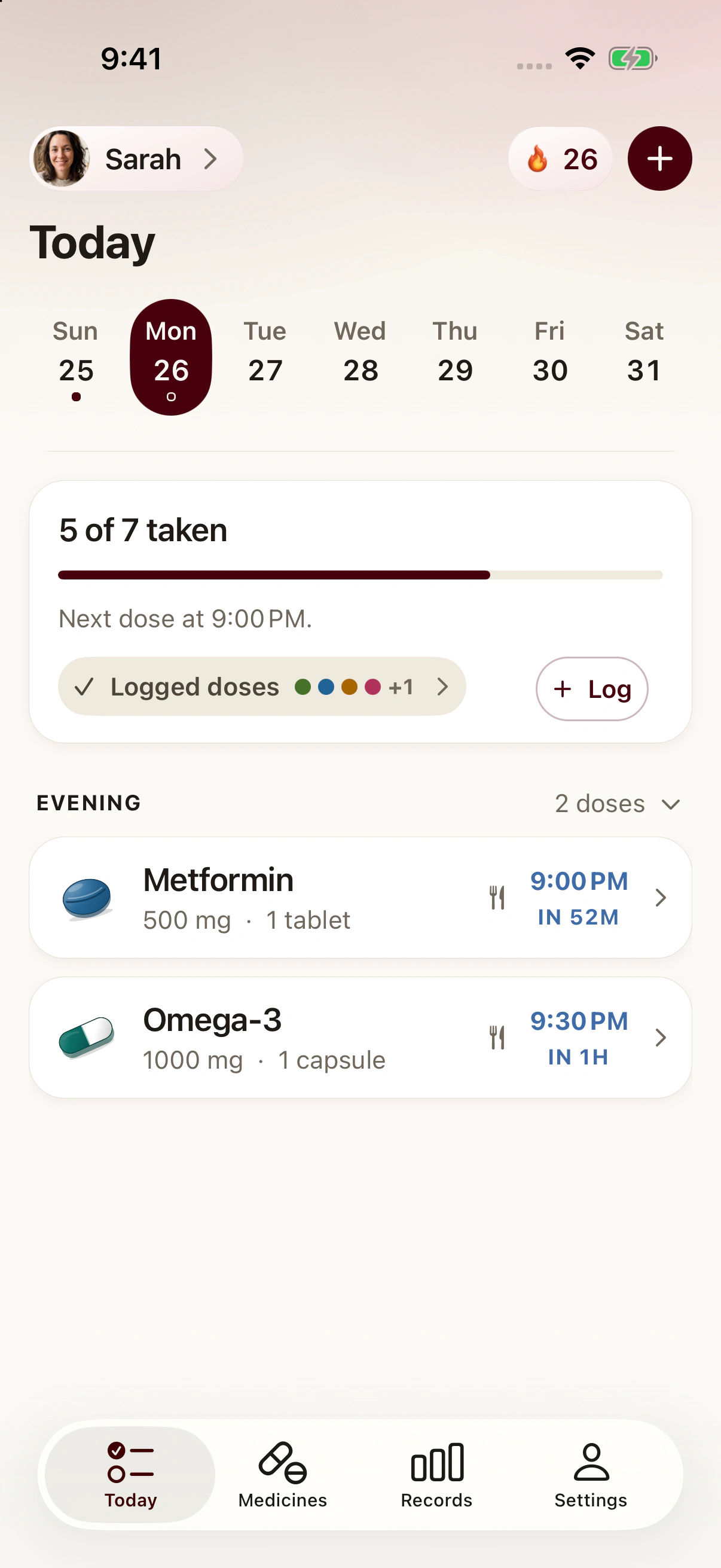
Pillbo can hold this list on your phone, with no account. The saved medicines, reminders and doses you log stay on the device and work offline.
Cloud backup is part of Pillbo Pro. Without that backup, keep a paper copy, because a lost phone can lose the list.
It is on iPhone now, and Android is coming soon.
How to keep it current
Change the list the same day something changes. An old list is easy to hand over by mistake.
- Add a medicine when you start it, including a short course.
- Mark it stopped when you are told to stop, and leave that mark until your GP or pharmacist has seen it.
- Change the dose or the time when the label changes.
- After hospital or a specialist visit, compare the list with the new papers before the next dose at home.
- If the brand name on the box changes, ask the pharmacist which pack matches the list.
A box you fill yourself should follow this list. How to use a pill organiser starts from a current list.
When several medicines share one day, how to manage multiple medicines covers the schedule. Ask before you move a dose time.
If you keep the list for a parent, agree who updates it. How to keep track of a parent's medicines covers that agreement.
When to take it with you
Take the current list, and take the packs when you can. The list is your memory of the routine, and the label is what the clinician can check.
Take the same list when a doctor is writing a letter for a trip. If that trip is into the Schengen Area, Schengen certificate for medication explains which paper you actually need.
| You are going to | Bring |
|---|---|
| Your GP | The list, and any medicine that is new or stopped |
| A pharmacist | The list, and the packs if a brand changed or two products look alike |
| Hospital, including emergency | The list and the packs you use |
| A medicine review | The list and every pack you actually take, including vitamins |
At a medicine review
Ask your GP if a Home Medicines Review is suitable when the list is long, a medicine is new, or your medicines changed after hospital. Your doctor decides, and refers you to a credentialed pharmacist who visits at home.
You do not pay for the review. The GP visit can cost unless they bulk bill.
A MedsCheck at a pharmacy does not need a referral. How to book either review, including the separate review used in residential aged care, is in how to get a free medicine review in Australia.
Before the visit, gather every medicine you take:
- Prescription medicines.
- Pharmacy, supermarket and online products.
- Vitamins, supplements and herbal products.
- Inhalers, patches, creams, and eye or ear drops.
Have your current list with those packs. Note any doses you skip, and why.
At the visit, the pharmacist can check use-by dates, how you take each medicine, ways to remember doses, and where you store them. The pharmacist then sends a report to your doctor, so book a follow-up.
Your doctor discusses the report with you and gives you a Medication Management Plan. A copy can go to your pharmacy if you agree, and you can share the plan with the other people who treat you.
You can have a Home Medicines Review every 2 years. You may need another sooner if your medicines change, such as when you start a new one.
Common questions
What should a medicines list include?
The name, what it is for, the dose, when you take it and how, for every prescription, pharmacy product, vitamin and complementary medicine.
How do I keep a medicines list up to date?
Change the list the day a medicine starts, stops or changes, and check it against the packs after hospital or a specialist visit.
Where should I keep my medicines list?
Keep one copy you can open at an appointment, on paper or on your phone, or ask your GP or pharmacist to start the list for you.
Should I take my medicines list to hospital?
Yes. Take the current list and the packs, and compare it with the discharge papers before the next dose at home.
Sources
- Medicines safety for older people, healthdirect
- Medicine list fillable form, Australian Commission on Safety and Quality in Health Care
- Medicines list - fillable form, Australian Commission on Safety and Quality in Health Care
- Safe use of medicines, Department of Health, Disability and Ageing
- Allergies, medicines, adverse reactions, Australian Digital Health Agency
- Home medicines review, healthdirect