How to get a free medicine review in Australia (MedsCheck and Home Medicines Review)
If you qualify, a MedsCheck is a free review you book at a community pharmacy, with no referral. A Home Medicines Review is a free home visit from a credentialed pharmacist, after a GP or eligible specialist refers you.
Two funded reviews
A MedsCheck is a private appointment with a pharmacist in a community pharmacy. A Home Medicines Review is a home visit from a credentialed pharmacist for someone living in the community.
You book the pharmacy appointment yourself. The home visit needs a referral, and the referrer decides whether it is suitable.
| Detail | MedsCheck | Home Medicines Review |
|---|---|---|
| Where | Face to face, in a private area of a community pharmacy | Face to face at your home for the first visit |
| How it starts | You ask the pharmacy for an appointment. No doctor's referral | A GP or eligible specialist refers you to a credentialed pharmacist |
| Cost when funded | No fee for the review. You still pay for any medicines dispensed | No fee for the review. The referral visit can cost unless the doctor bulk bills |
| How often | Not funded if you had a MedsCheck, Diabetes MedsCheck, Home Medicines Review or Residential Medication Management Review in the last 12 months | Once every 24 months, or sooner if the referrer decides a significant change makes another review necessary |
| Who can get it | You live at home and hold a Medicare or DVA card, and you meet one of the extra rules below | You live at home, hold a Medicare or DVA card, and the referrer confirms a clinical need |
Who a review suits
Ask when you take several medicines, a hospital stay has changed them, a medicine makes you feel unwell, or you help an ageing parent who lives at home. Those are reasons to ask, not a promise that the funded review applies.
For a MedsCheck, you live at home, you hold a Medicare or Department of Veterans' Affairs (DVA) card, and you have not had a MedsCheck, Diabetes MedsCheck, Home Medicines Review or Residential Medication Management Review in the previous 12 months. One of the following also has to be true.
- You take five or more prescription medicines.
- You have had a recent significant medical event, such as a new diagnosis, a change in your health, or treatment that could affect how you take your medicines.
- You take a medicine the pharmacist judges to have a high risk of adverse events.
The pharmacist checks the count and whether a recent hospital stay counts in your case. Do not assume the stay qualifies you on its own.
A Home Medicines Review has a different test. You live at home with a Medicare or DVA card, and the referrer confirms a clinical need because you are at risk of harm from your medicines or already having that problem.
It is worth asking the referrer if you:
- Take a lot of medicines, or medicines from more than one doctor.
- Have started a medicine, or have recently been in hospital.
- Feel unwell after a medicine, forget doses, or are worried about your medicines.
If you help a parent who lives at home, the review is theirs, and you can be there when they want you there. How to keep track of a parent's medicines covers the list and the dose record around that visit.
People in residential aged care cannot have a funded MedsCheck or Home Medicines Review. Ask the doctor about a Residential Medication Management Review instead.
That review still needs a referral, and the pharmacist visits the aged-care home.
Book a MedsCheck
You do not need a doctor's referral. The pharmacist checks whether the funded service applies, in a private sit-down rather than at the dispensing counter.
- Ask a community pharmacy for a MedsCheck appointment.
- Take your Medicare or DVA card so they can check the funded rules.
- Bring the medicines and prescriptions in the list below.
- Read the consent form. Without consent for the claim, the pharmacy cannot provide the funded review, and it may charge you.
Ask for a Home Medicines Review
A GP can refer you. So can a specialist in pain medicine, a specialist physician, a psychiatrist, or a specialist in palliative medicine.
- Ask that practitioner whether a Home Medicines Review is suitable.
- If they refer you, you can ask for the referral to go to your usual pharmacy or to another provider.
- A credentialed pharmacist comes to your home for the first visit.
- After the report is sent, book a follow-up with the referring practitioner.
What to prepare
Gather what you actually take, not only the last prescription. Do this before the pharmacy appointment or the home visit.
- Prescription medicines, and any prescriptions or repeats you still have.
- Pharmacy, supermarket and online products.
- Vitamins, supplements and herbal products.
- Inhalers, patches, creams, and eye or ear drops.
- Allergies, and any reaction you want the pharmacist to know about.
- Doses you skip, and why.
- A current list, if you already keep one.
How to keep a medicines list sets out what to write for each medicine. Update that list before you go, so the pharmacist is not working from an old page.
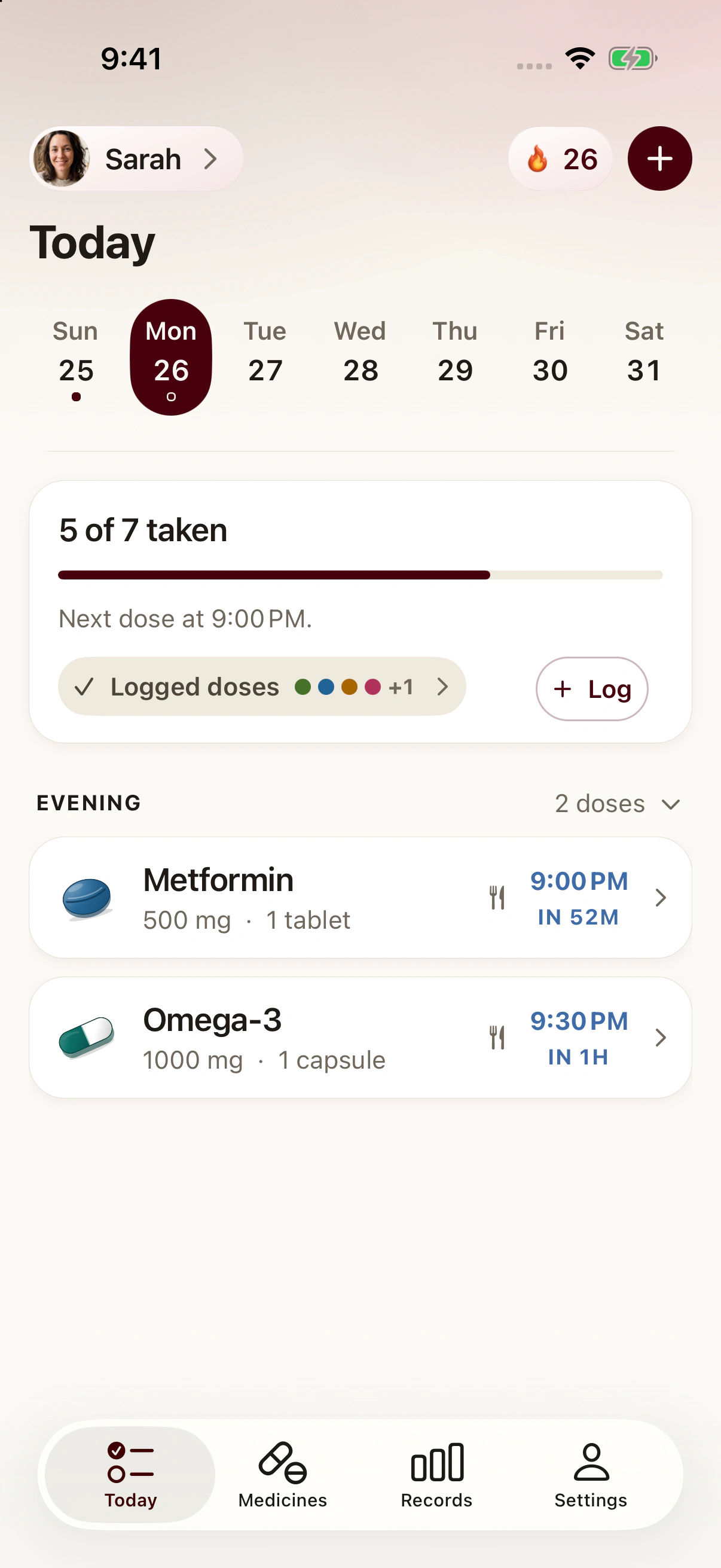
Pillbo can keep this list on your phone, including pharmacy medicines and supplements, with no account. It is on iPhone now, and Android is coming soon.
Take the packs as well as the list. The pharmacist checks the medicines you brought, not only a screen.
What happens, then what you do next
During a MedsCheck
The pharmacist checks what you brought against the pharmacy's dispensing record, and talks through your conditions, allergies and questions. You should leave with a medicines list and a written action plan of the goals you agreed.
They can show you how to take and store the medicines. With your consent, they may contact your doctor with that list and plan, and a record can be added to My Health Record if you have one.
During a Home Medicines Review
The pharmacist talks through prescription medicines, pharmacy products, vitamins and supplements. They can check use-by dates, how you take each medicine, ways to remember doses, where you store them, and devices you use, such as an inhaler.
A carer can take part when the person being reviewed wants that. The pharmacist then writes a report for the referrer, and for the GP if that is a different person.
After the review
Do not stop or change a prescribed medicine because of the review until the prescriber has agreed. For a Home Medicines Review, book the follow-up so the doctor can discuss the report and give you a Medication Management Plan.
- Keep your copy of the action plan, or of the plan the doctor writes.
- Say if you want your pharmacy, and anyone else who treats you, to receive a copy.
- Share the Medication Management Plan with the other people who treat you.
- Update your own list the same day a medicine, a dose or a time changes.
If you have a My Health Record, the Home Medicines Review report should be added to it. A MedsCheck can be recorded there too.
How to manage multiple medicines covers one schedule after a time changes. Ask before you move a dose yourself.
Pillbo can show the new times and the doses you log as taken or skipped. It does not check for medicine interactions, and it does not replace the plan from your doctor or pharmacist.
Common questions
Do I need a referral for a free medicine review?
A MedsCheck is booked at a pharmacy with no referral, while a Home Medicines Review needs a referral from a GP or an eligible specialist.
Is a medicine review free in Australia?
A funded MedsCheck or Home Medicines Review is free if you qualify, though the doctor visit for a Home Medicines Review referral can cost unless they bulk bill.
How often can I have a MedsCheck or a Home Medicines Review?
A funded MedsCheck needs 12 months since a MedsCheck, Diabetes MedsCheck, Home Medicines Review or residential review, and a funded Home Medicines Review is once every 24 months unless the referrer says a change makes another one necessary.
Can I get a Home Medicines Review in an aged-care home?
No. Residential aged care uses a Residential Medication Management Review, which still needs a doctor's referral and a pharmacist visit at the home.
Sources
- Home medicines review, healthdirect
- Medicines safety for older people, healthdirect
- Home Medicines Review, Pharmacy Programs Administrator
- MedsCheck and Diabetes MedsCheck, Pharmacy Programs Administrator
- MedsCheck Patient Information and Consent, Pharmacy Programs Administrator
- Home Medicines Review, Department of Health, Disability and Ageing
- MedsCheck and Diabetes MedsCheck, Department of Health, Disability and Ageing