How to keep track of a parent's medicines
Agree what help your parent wants, keep one list, and record each dose in the one place every carer checks first.
Agree what help they want
Start with what they want help with. A reminder, collecting repeats, and giving the medicines are different jobs.
Agree who will:
- Order and collect repeats.
- Organise doses, if they need help with that.
- Give each dose and update the record.
- Speak to the pharmacist or doctor, with their permission.
Get consent before you share health details with a sibling, a carer, or an app. They can limit that consent, and change it.
If they do not want help, respect their choice. Talk with them and their doctor about any concerns.
Keep one list
Include prescribed medicines, pharmacy and supermarket products, vitamins, supplements, and herbal products. For each, write the name, strength, dose, time, the reason if you know it, plus the GP and usual pharmacy.
After hospital or a specialist visit, compare the list with the new paperwork before the next dose. Mark stopped medicines as stopped.
Stopped and expired packs go back to a pharmacy. See how to dispose of expired medicines.
If a brand name has changed, ask the pharmacist to check which pack matches the new list.
How to build that list is in managing multiple medicines.
Ask the doctor about a Home Medicines Review
In Australia a credentialed pharmacist can visit, review the medicines your parent actually takes, and write a report. The doctor uses it, with your parent, to make a Medication Management Plan.
They need a doctor's referral, and the doctor decides if a review is suitable. If your parent agrees, a copy can go to their pharmacy.
You do not pay for the review itself. The doctor's visit can cost unless they bulk bill, and people in residential aged care still need that referral.
Ask their doctor about a review if medicines have changed or doses are being missed or repeated.
Choose a record everyone can use
- A paper chart with the day, the time, the medicine, and the initials of the person who gave it. Keep it with the medicines.
- A pharmacy pack, if the pharmacist agrees. Ask which medicines belong in it and which should stay separate.
- A shared phone record, if the people giving doses will open it.
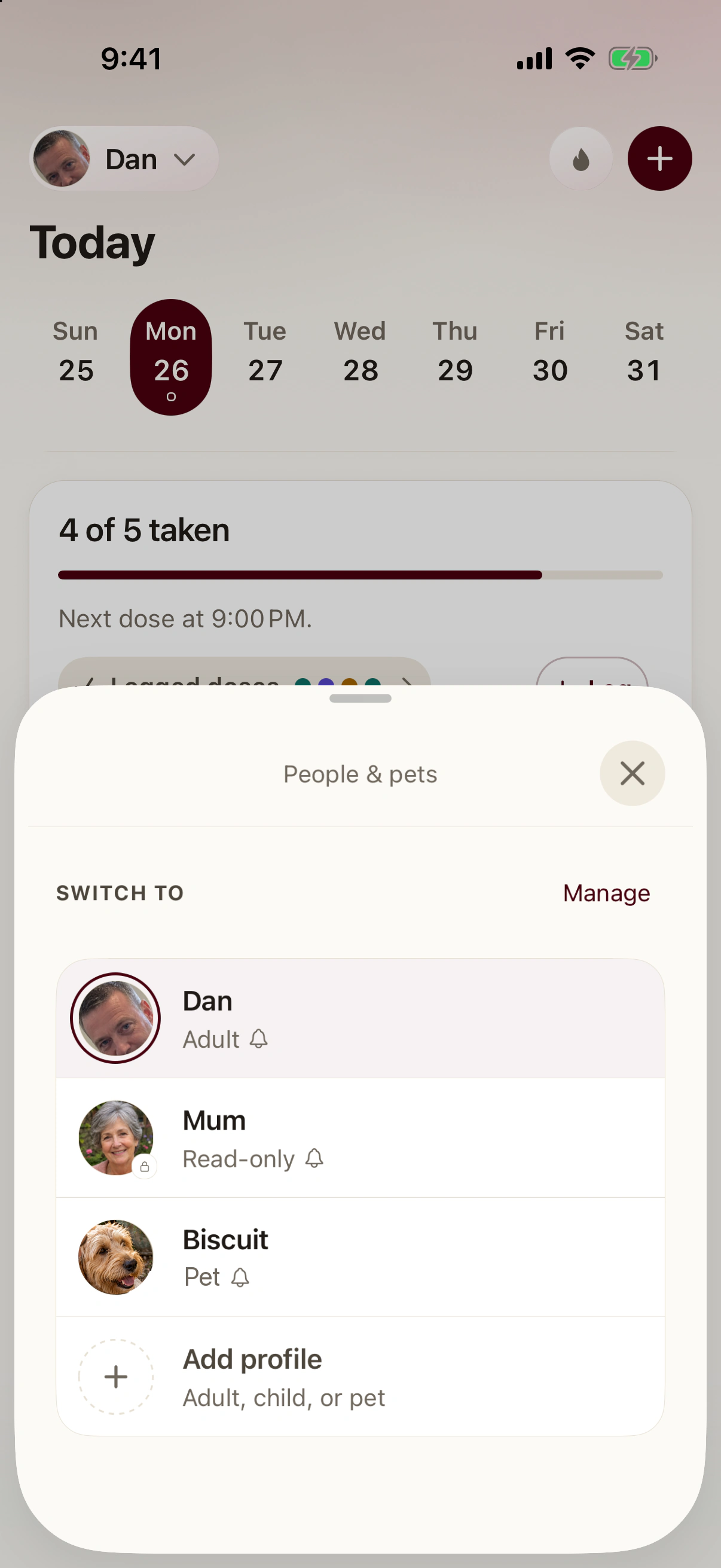
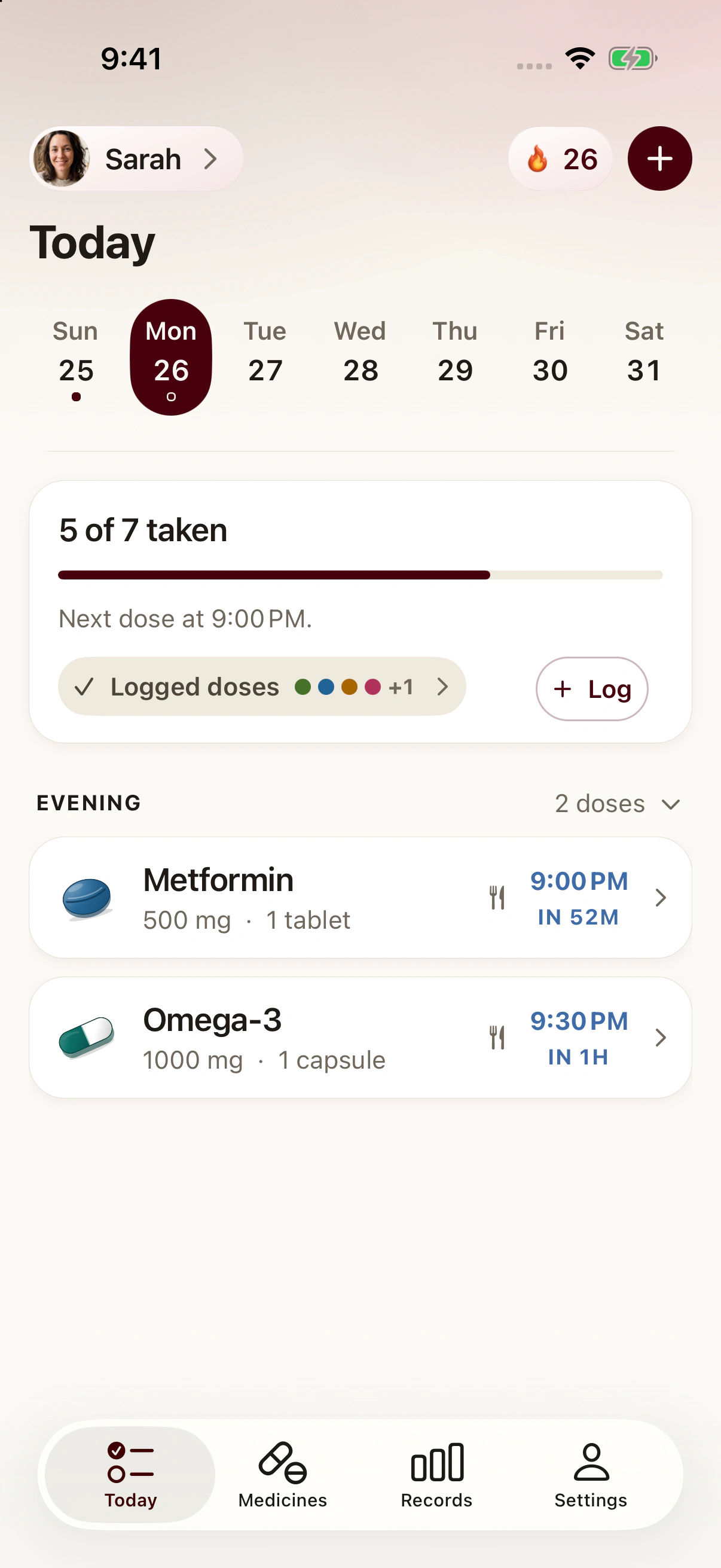
A parent's medicines can sit on their own Pillbo profile, on your phone (Pillbo Pro) or on theirs. Sharing needs consent.
Others see the day and the week, and a nudge does not name the medicine. Check the log before a dose.
Updates from another phone need an internet connection.
What sharing allows is on the ageing parents page.
Check the record before giving a dose and update it afterwards. If you are unsure whether a dose was already given, ask the pharmacist or doctor before giving more.
For more guidance, see what to do if a dose was missed.
Common questions
How do I keep track of an older parent's medication?
Agree who does what, keep a single list of every medicine and supplement, and record each dose in one place that every carer checks first.
What is a Home Medicines Review?
A doctor refers your parent to a credentialed pharmacist, who visits at home and reviews the medicines they actually take. The review is free. The doctor's visit may cost unless they bulk bill.
What if my parent does not want an app?
A paper chart or a pharmacy pack may suit them better. An app only helps if the person giving the dose will use the record.
Sources
- Home medicines review, healthdirect
- Medicines safety for older people, healthdirect
- Accidental overdose of medicine, healthdirect