How to store medicines safely at home
Follow the label or the leaflet. Most medicines belong below 25°C in a cool, dry cupboard, out of the bathroom and the car. Use the fridge only when the label says so.
How to store medicines
Follow the storage line on the pack and in the consumer medicine information leaflet. If the box has no leaflet, ask the pharmacist how to store that medicine.
Most medicines need a cool, dry place below 25°C. Use the fridge only when the label says so, or a doctor or pharmacist has told you to.
- Choose a cupboard or drawer that stays cool and dry, and that the person taking the medicine can still open.
- Leave it in the original pack until a dose is due.
- Lock it away, out of sight and reach of children, pets, and anyone who may not understand the label.
- Ask the pharmacist if you are unsure, including before you move tablets into a pill organiser.
| Place | OK? | Why |
|---|---|---|
| Cool, dry cupboard or drawer | Yes | The usual spot for medicines kept below 25°C |
| Bathroom | No | Humidity is high |
| Windowsill | No | Direct sunlight. A kitchen sill is a humid spot to avoid |
| Top of the fridge or microwave | No | Those appliances give off heat |
| Parked car, or a bag in the sun | No | Hard to keep cool and dry |
| Fridge | Only if the label says so | Fridge medicines need 2°C to 8°C |
| Fridge door | No | It may not stay at 2°C to 8°C |
| Freezer | No | Do not freeze medicines |
Keep medicines in the original pack
Keep each medicine in its original pack until a dose is due. Some are sensitive to light, moisture, or temperature, and the pack is part of keeping them stable.
Ask a pharmacist before you move tablets into a pill organiser or any box you fill yourself. They can tell you which medicines have to stay in their pack.
How to manage multiple medicines covers a box you fill yourself, and a pharmacy pack. Choosing the compartments and filling a week is in how to use a pill organiser.
Where in the fridge
Fridge medicines need 2°C to 8°C in the main compartment. Do not freeze them.
Leave them out of the door, the top shelf, and the crisper. Keep them more than 40 mm from the back and the sides, which may not hold that temperature.
If the label says refrigerate but you are travelling, or the power is out, ask the pharmacist whether that medicine can spend any time below 25°C. Do not guess a time.
Storing medicines in hot weather
On a hot day, take only the medicines you will need while you are out, and keep those cool and dry. Leave the rest at home.
Before a run of hot days, have enough at home so you can stay in during the hottest part of the day. If you take medicines regularly, ask your doctor what you should do in the heat.
If the house itself warms up, the below-25°C rule still applies. Ask the pharmacist if a pack may have got too warm.
If a power cut affects the fridge, some medicines in it may become unsafe. Note the time the power failed, keep the door closed, and ask a pharmacist or doctor if you think a medicine has spoiled.
Check the expiry
Use a medicine only up to the expiry on the pack. Past that date it will no longer work as well, and it can become harmful.
The date can sit under a label, on a lid, or at the end of a tube. If you have been taking an expired medicine, talk to your pharmacist or doctor.
A compounded medicine can be sensitive to storage temperature, so follow the note the pharmacist wrote. Return anything expired or unwanted to a pharmacy, using how to dispose of expired medicines.
Where a bench reminder falls short
A pack on the kitchen bench or the bathroom sink is a common way to remember a dose. The bathroom is humid, a windowsill is sunny, and a pack left in the open is in sight of children.
Measuring a child's dose, and keeping a record so two carers do not double up, is in how to give medicine to a child.
Putting the medicines in a cool cupboard removes that cue. A phone reminder can replace it.
The daily routine is in how to remember to take your medicine.
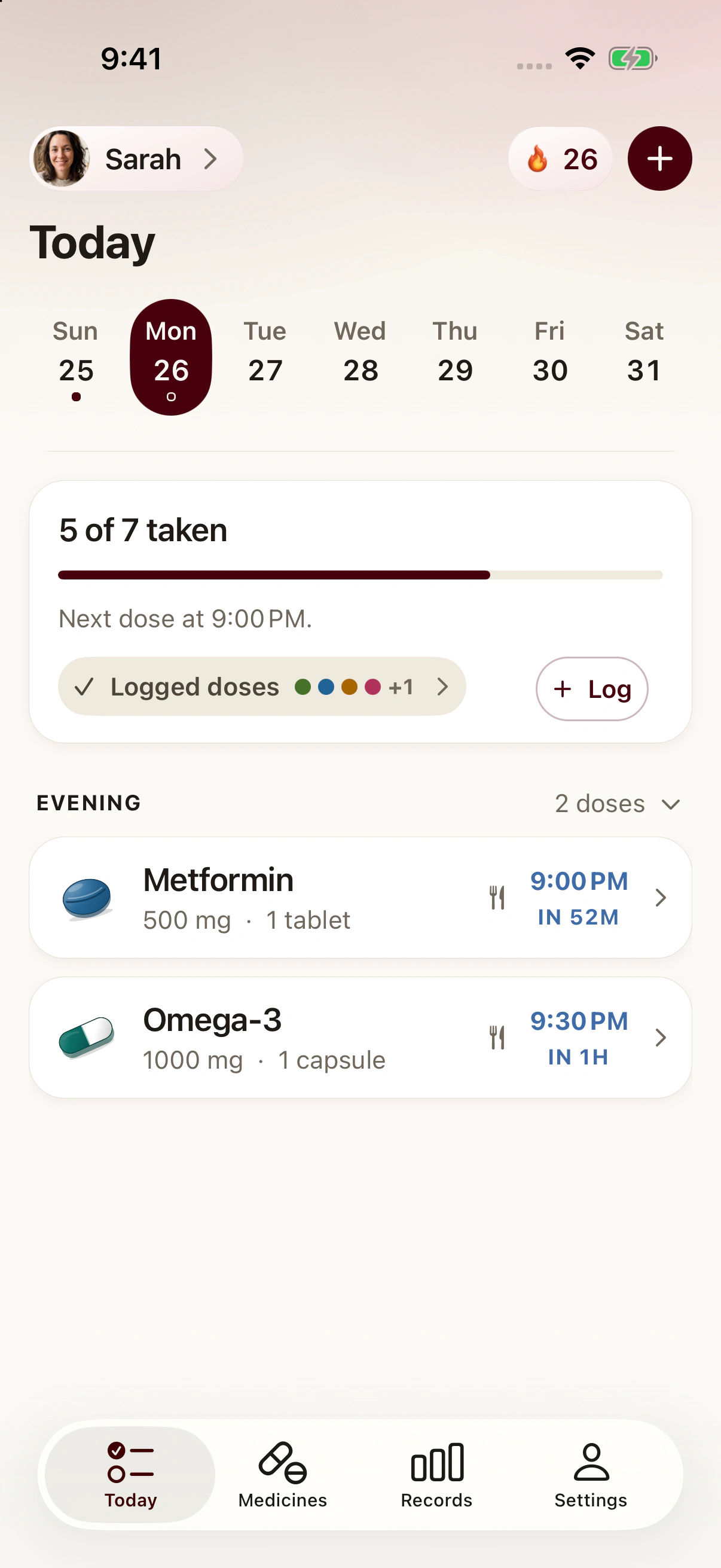
Pillbo can hold that reminder, and a log of doses you mark taken or skipped. Turn notifications on so the alert can arrive.
It does not monitor temperature, and it will not tell you whether a medicine was stored safely.
After you put them away
- Set the reminder for the time already on the label.
- Leave the pack in its cool, dry place.
- Mark the dose after you take it, not when the alarm rings.
Common questions
Where should I store medication at home?
A cool, dry cupboard or drawer, in the original pack, out of sight and reach of children and pets.
Can I store medicines in the bathroom or a hot car?
No. Bathrooms are humid, and a parked car is not a cool, dry place. Take only the doses you need while you are out.
Should medicines go in the fridge?
Only if the label, your doctor, or your pharmacist says so. Use the main compartment, and do not freeze them.
What if medicines got hot in a power outage?
Ask your pharmacist or doctor if you think a medicine has spoiled during the outage.
Sources
- Out-of-date medicines, healthdirect
- Plan ahead to beat the heat, NSW Health
- Power outages in a heatwave, NSW Government
- Storing your palliative care medicines safely, Pharmaceutical Society of Australia
- New CAL medicine storage guidance, Australian Pharmacist