When should you take your vitamins?
Take vitamins A, D, E and K with a meal that has some fat. Space iron and calcium, and keep one time you can repeat.
Best time to take vitamins
Check whether your supplement needs food before choosing a time.
If a doctor or pharmacist has already named a time, keep it. Use the table when the bottle only says once a day.
The same food words appear on medicine labels. What they mean is in take with food or on an empty stomach.
| Vitamin or mineral | With food? | A time that usually fits |
|---|---|---|
| Vitamins A, D, E and K | With a meal or snack that has some fat | The meal that already has fat |
| A multivitamin | With food, and a drink of water | A meal you rarely skip |
| Vitamin C or vitamin B12 | With water, on an empty stomach | B12 in the morning |
| Calcium carbonate | With a meal | Not at the same time as iron |
| Calcium citrate | With or without food | Not at the same time as iron |
| Iron | Prescribed iron: away from food. Otherwise follow the pack | Not with calcium, tea, coffee or milk |
Vitamins A, D, E and K are fat-soluble, so the body stores them. High doses can be toxic, so avoid taking extra doses when you are unsure.
Vitamin D is one of those four. A supplement is absorbed better with a meal or snack that includes some fat, and a small amount is enough, such as milk, yoghurt, or food cooked in oil.
A multivitamin mixes fat-soluble and water-soluble vitamins. Take it with food so the fat-soluble ones in the tablet can be absorbed.
Should I take vitamins morning or night?
There is no single best hour. Morning works when breakfast has some fat, or when the vitamin is B12.
B12 is water-soluble. Take it with a glass of water on an empty stomach, and keep it for the morning so it does not get in the way of sleep.
A night dose of vitamin D still needs food that has some fat. Swallowing it as you get into bed, with no meal, may limit absorption.
Calcium carbonate needs the acid your stomach makes when you eat, so it belongs with a meal. Calcium citrate can be taken with or without food.
Space iron and calcium
Calcium can interfere with iron. Take the two supplements at different times of the day.
Coffee, tea, red wine, milk, cheese, and calcium supplements can reduce iron absorption. Have them between meals rather than with the iron.
Iron medicine prescribed for anaemia is taken on an empty stomach, about an hour before food or two hours after. Take it with water or juice, and not with tea, coffee, milk, cola, chocolate, or wine, or in the hour after.
Swallow those tablets or capsules whole, and do not crush them. If the dose upsets your stomach, ask a pharmacist before you move it onto a meal.
Some iron tablets include vitamin C, which helps absorption. A multivitamin can contain minerals that reduce it, so check before you take both.
Iron can also reduce absorption of some prescription medicines, including thyroid hormone tablets. Take the full medicine list to the pharmacist.
A calcium supplement is absorbed more efficiently at 500 mg or less at one time. Ask before you split a tablet.
How to remember to take vitamins
Choose the time from the table, then attach it to something you already do then.
- Write the vitamin, the food rule, and the time on one line.
- Keep the bottle where that cue happens, unless the label says to store it somewhere else.
- Swallow it, then mark the dose. Do not mark it when the alarm rings.
- Keep prescribed medicines at their prescribed times.
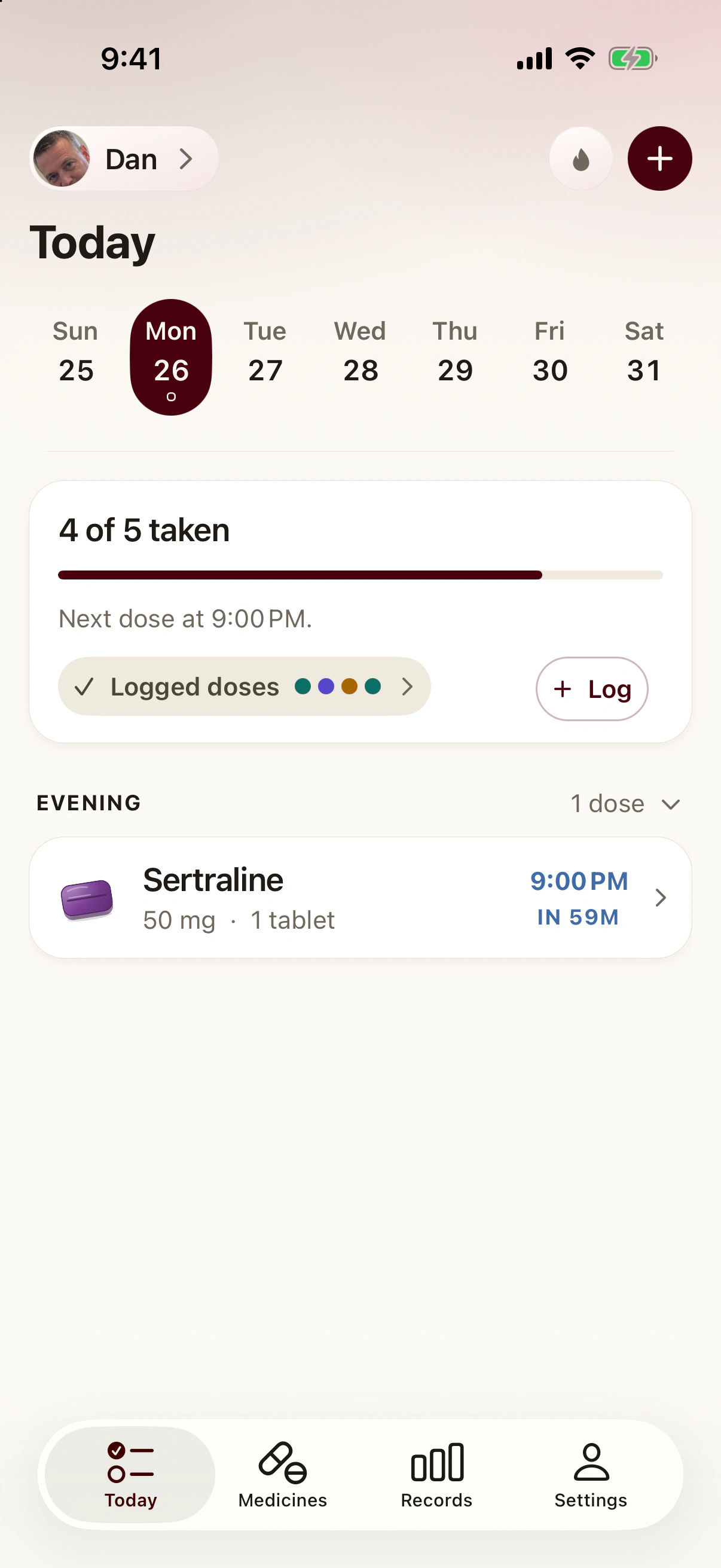
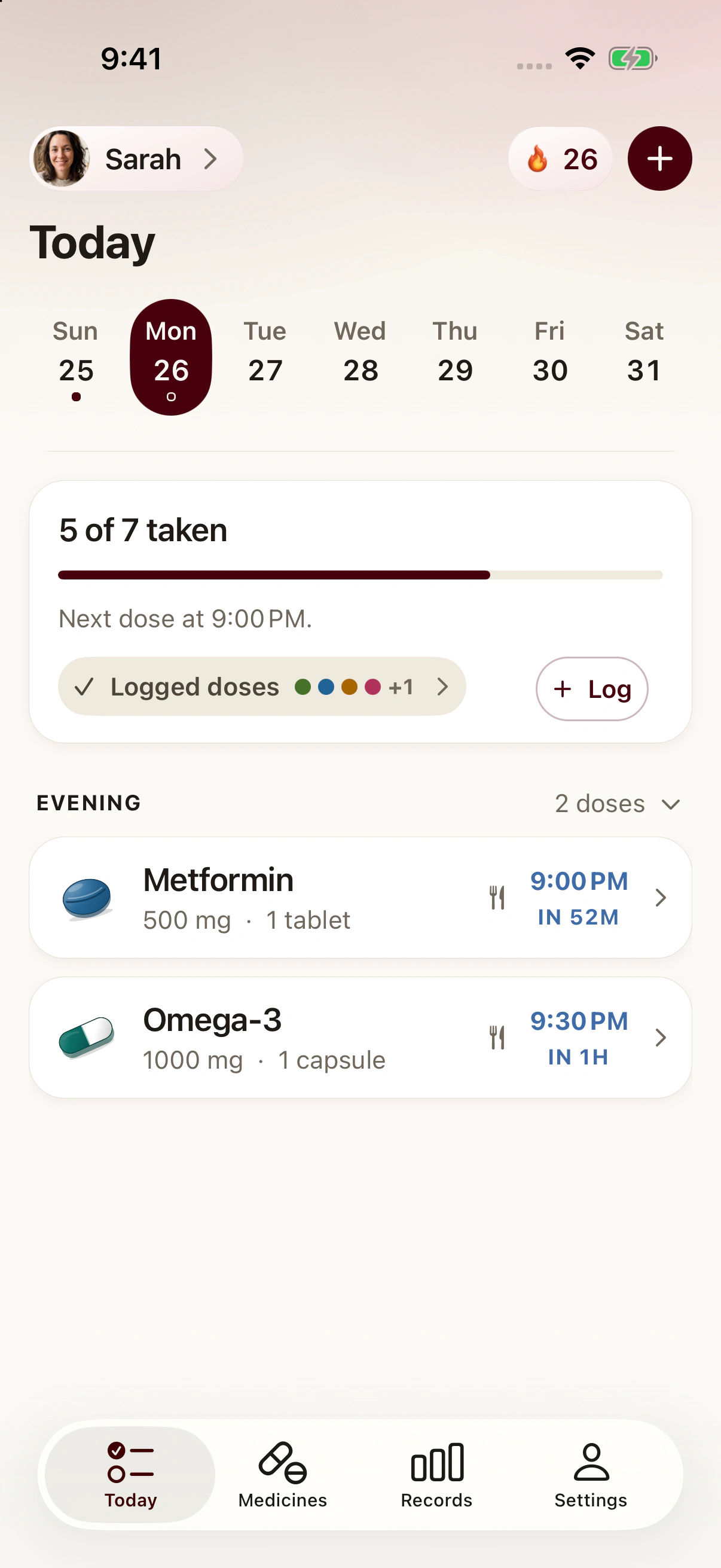
Pillbo can hold the reminder and a log of taken, skipped, or missed doses. It does not advise on missed doses or check supplement interactions.
The same pattern for a prescribed medicine is in how to remember to take your medicine.
If you are not sure you already took it
Do not take another dose just because you are unsure. Too much of some vitamins can be harmful.
Check the bottle and your log. If they disagree, ask a pharmacist or your GP before you take more.
A missed prescribed dose has its own leaflet. Start with what to do if you miss a dose.
When to ask before you start
Check with a pharmacist, GP, or accredited dietitian before you add a supplement if:
- You are pregnant, breastfeeding, or planning a pregnancy.
- You already take a prescribed medicine, especially iron or a thyroid hormone tablet.
- You take a multivitamin and a separate iron, calcium, or vitamin A, D, E, or K product.
- You feel unwell after a dose, or the label amount looks much higher than a normal daily intake.
A doctor may suggest vitamin D if you are low. High-dose supplements are for when a doctor has recommended them.
Common questions
Should I take vitamins in the morning or at night?
Morning or night matters less than taking them with the right food, at a time you can repeat every day.
When should I take vitamin D?
With a meal or snack that includes some fat. Breakfast or dinner both work if that meal has some fat.
Can I take iron and calcium together?
No. Calcium can interfere with iron, so take them at different times, and ask a pharmacist if you also take a prescribed medicine.
How do I remember to take vitamins every day?
Tie each one to a meal or a glass of water you already have, set a reminder for that time, and mark the dose after you take it.
Sources
- Vitamin and mineral supplements, Better Health Channel
- Vitamin D and your health, healthdirect
- Foods high in iron, healthdirect
- Anaemia medicines, healthdirect
- The Best Time to Take Vitamins, Cleveland Clinic
- The Best Time of Day To Take Vitamin D, Cleveland Clinic
- Vitamin D fact sheet for consumers, NIH Office of Dietary Supplements
- Iron fact sheet for consumers, NIH Office of Dietary Supplements
- Calcium, Eat For Health