Spoon theory explained
Spoon theory uses spoons as units of energy. Christine Miserandino coined it in 2003 while explaining life with lupus to a friend.
What spoon theory is
Spoon theory is a way to show that energy can run out. Christine Miserandino coined it in 2003, while explaining life with lupus to a friend.
They were in a diner. She handed over spoons, then took them back as the day's tasks were listed.
The spoons were units of energy. A limited handful makes the day's choices visible, where an unlimited day hides them.
How the spoons work
In the original story, her friend counted out 12 spoons, and showering cost one. When the spoons were gone, they were gone.
After the morning tasks in that story, six spoons were left and work had not started. The same task can cost more on a painful day, or after a bad night.
There is no standard price list. People now use spoon theory for chronic illness, and for other days when ordinary effort costs more than it looks.
Example spoon costs, as an illustration
This table is an illustration, not a measurement and not the costs from the original story. Rewrite every number for your own day.
| Example task | Example spoon cost |
|---|---|
| Getting dressed | 1 |
| Showering | 1 to 2 |
| A simple meal | 2 |
| Messages and small admin | 1 |
| A medical appointment | 3 |
| A work shift or a long outing | 4 |
| Seeing friends | 2 |
Who uses spoon theory
It is a shared description, not a diagnosis. Two people with the same condition can start with different numbers, and tomorrow's count can change.
- Chronic illness, including lupus, the condition in the original story.
- Chronic pain, and fatigue conditions.
- Disability, when the effort is real and easy to miss.
- Mental health, when mood, anxiety or brain fog spends the same budget.
- Neurodivergence, when noise, planning or social effort costs energy too.
Spoonie, and borrowing from tomorrow
A spoonie is someone who uses spoon theory for their own energy. The word is common in chronic illness communities.
Borrowing spoons from tomorrow means using more energy today than you have. The essay calls this borrowing against tomorrow's spoons, and the next day is harder with fewer of them.
- A bigger day can be worth it.
- Leave a quieter day after, instead of repeating the same spend.
- Keep a spare when you can, in case you become more unwell.
Ways to save spoons
These are planning habits, not a treatment.
- Pace the day. Spread the costly tasks, and stop before the last spoon.
- Plan the expensive tasks before the day starts.
- Batch errands, so you pay the cost of getting going once.
- Rest before you are empty, not only after a crash.
- Say no to a plan that would spend spoons you need later.
- Ask for one specific kind of help, such as dinner or a lift.
- Automate small decisions: the same breakfast, clothes ready, a reminder instead of a debate.
A short note of what the day cost can show the pattern. How to keep a symptom diary keeps that note to one line.
How friends and family can help
"You don't look sick" misses the point. The limit is energy other people cannot see.
- Believe today's count. It can be different tomorrow.
- Offer a specific task, rather than "let me know".
- Do not make them spend spoons proving they are unwell.
- Keep a smaller version of the plan, so cancelling is not a failure.
- Ask which tasks cost a spoon, instead of guessing from how they look.
A medicine check should not cost a spoon
Wondering whether you already took a dose still spends energy. It is easy to get wrong when you are tired.
Put the reminder at the time on the label, and mark the dose after you take it. How to remember to take your medicine sets that out.
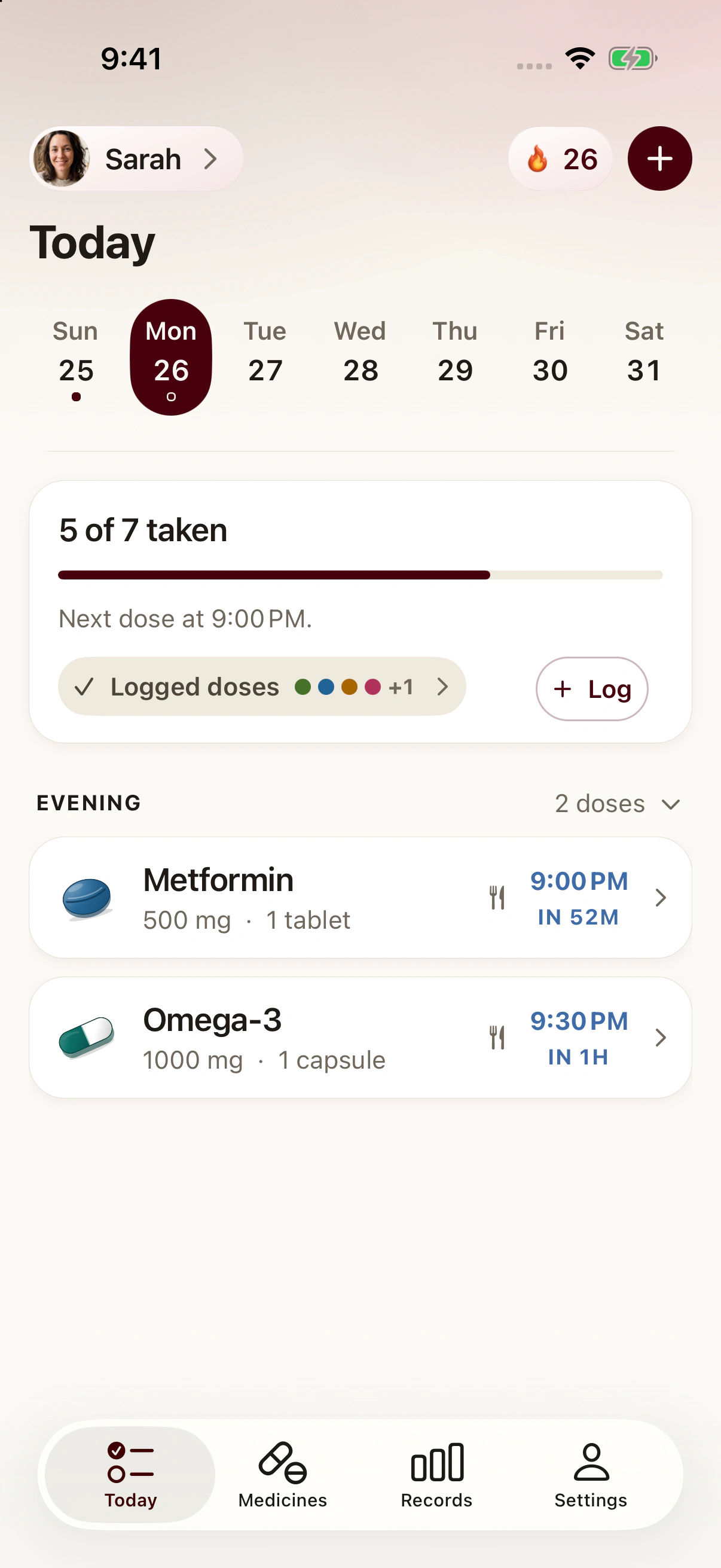
Pillbo is a simple medication reminder, or a digital pillbox, that tracks whether you have taken your medicines. Managing them should not cost a spoon.
Its late-dose alarm rings even on Silent, on iPhone and Android. Core features are free: your own reminders and the dose log.
It will not tell you whether a late dose should still be taken. Check the leaflet, or ask a pharmacist.
It is on iPhone now, and Android is coming soon.
Common questions
What is spoon theory?
Spoon theory uses spoons as units of energy, so a limited day with chronic illness can be explained in everyday language.
What is a spoonie?
A spoonie is someone who uses spoon theory to describe their own limited energy, often while living with chronic illness.
What does borrowing spoons from tomorrow mean?
It means spending more energy today than you have, so the next day starts with fewer spoons.
Is spoon theory a medical diagnosis?
No, it is a metaphor for explaining energy, not a diagnosis, a test or a treatment.
Sources
- The Spoon Theory, Christine Miserandino, But You Don't Look Sick
- Spoon theory, Wikipedia
- Coping with the mental health impacts of lupus, Lupus Foundation of America