Can you drink alcohol while taking antibiotics?
It depends on the antibiotic. Check the label and ask a pharmacist or doctor before you drink, and do not assume yours is safe with alcohol.
Check this antibiotic before you drink
Can you drink alcohol on antibiotics? It depends on the antibiotic.
Check the label and the Consumer Medicine Information (CMI) leaflet, then ask a pharmacist or doctor. Do not copy the alcohol rule from a different pack.
The CMI is where interactions with food, drinks, and alcohol are listed. Ask the pharmacist for a copy if the box does not include one.
| What you find | What to do |
|---|---|
| The label or CMI says to avoid alcohol | Do not drink while you take it, and follow any wait after the last dose |
| There is no line about alcohol | Ask before you drink. Do not guess from another medicine |
| You feel unwell | Avoid alcohol while you are unwell, then still check this antibiotic |
Some antibiotics do not mix with alcohol
Drinking in moderation is unlikely to cause problems with the most common antibiotics. Alcohol can still worsen side effects such as feeling sick or dizzy, so check the one you were given.
Mixing alcohol with metronidazole, tinidazole, or isoniazid can lead to unpleasant effects. You may need to wait 2 to 3 days after finishing before you drink again.
- Drowsiness and dizziness
- Abdominal pain
- Nausea
- Sweating and hot flushes
- Headache
- Palpitations
| Antibiotic | Alcohol |
|---|---|
| Metronidazole | Avoid it while you take the medicine, and for 48 hours after you stop |
| Tinidazole | Avoid it while you take the medicine, and for 72 hours after you stop |
| Isoniazid | Mixing it with alcohol can lead to those effects. Ask how long to wait after the last dose |
| Doxycycline | Alcohol can affect it, and it may be less effective in people with a history of heavy drinking |
| Erythromycin | It can be affected by alcohol. Ask before you drink |
| Linezolid | It can be affected by fermented drinks, including wine, beer, sherry, and lager |
Some other antibiotics can be affected too. If you plan to drink, check with your doctor or pharmacist first.
Alcohol and your other medicines
Alcohol can interact with many medicines, not only antibiotics. That includes pharmacy and supermarket medicines, and herbal products.
It can worsen side effects, make a medicine less effective, or cause other symptoms. Read the label, and do not drink if it warns you about alcohol.
Never combine benzodiazepines or opioids with alcohol. That mix can cause overdose and death.
Keep the doses, including on a night out
- Read the alcohol line on the label and in the CMI.
- Ask the pharmacist if that line is missing, or you are unsure.
- Take each dose at the time on the label. Do not move one so you can drink.
- Finish the course you were prescribed, unless your doctor tells you to stop.
- Do not take more than you were told, even if tablets are left.
- Return what you do not use to a pharmacy. Do not save it for later.
Spacing the doses, and whether this one is taken with food, is in how to take antibiotics.
If a dose is missed, open that medicine's leaflet before you take anything extra. The same caution for any medicine is in what to do if you miss a dose.
Missing doses, or not finishing the course, is one way antibiotic resistance develops. Stop early only if your doctor tells you to.
Leftover antibiotics go back to a community pharmacy, and the disposal service is free. How to dispose of expired medicines explains the drop-off.
A reminder for the short course
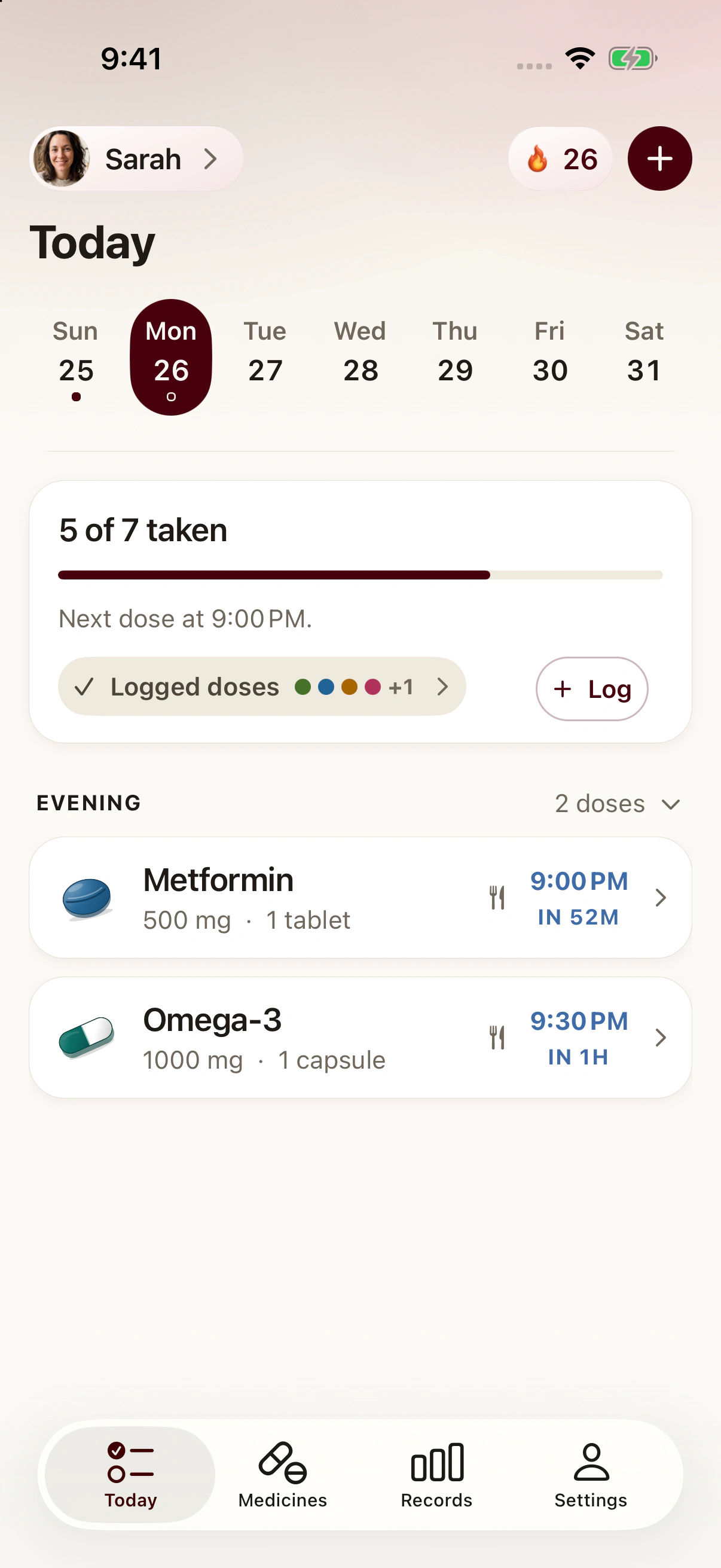
Set a reminder for the times already on the label, and mark the dose after you take it. A short course is easy to drop when you are out.
Pillbo can hold those times for the course, and a log of each dose you mark taken, skipped, or missed. It will not tell you whether this antibiotic is safe with alcohol.
If you have already had a drink
Contact your doctor or pharmacist, and tell them the antibiotic name and when you drank. Do this promptly if you feel unwell.
With metronidazole, tinidazole, or isoniazid, effects can include nausea, dizziness, a headache, flushing, abdominal pain, or palpitations.
Do not take more than you were prescribed. Keep the next doses at the times on the label, unless you are told to stop.
Common questions
How long after finishing antibiotics can I drink?
You may need to wait 2 to 3 days after the last dose. Metronidazole is often 48 hours and tinidazole 72 hours, so follow your own label.
Does alcohol stop antibiotics working?
Moderate drinking is unlikely to be a problem with the most common antibiotics, but some are affected and side effects can be worse, so check yours first.
What if I already drank on antibiotics?
Contact your doctor or pharmacist if you feel unwell, and do not take more of the antibiotic than you were prescribed.
Can I skip an antibiotic dose so I can drink?
No. Take each dose at the time on the label, and finish the course unless your doctor tells you to stop.
Sources
- Medicines and alcohol, healthdirect
- Antibiotics, healthdirect
- How to read Consumer Medicine Information (CMI), healthdirect
- Prescription meds and alcohol – what are the risks?, Alcohol and Drug Foundation
- Antibiotics - Interactions, NHS
- Safe disposal of unwanted medicines, Therapeutic Goods Administration